


Shopify Editions
5 min read
Checkout, payments and fraud: what Shopify Fall '26 changes
Shopify Protect is live, Rollouts can run your Black Friday sale, and checkout custom fields arrive after Cyber Monday. What to switch on, and in what order.
Shopify Editions
5 min read
Managed Markets flat rates, per-market shipping and returns, DHL Express labels and the EU withdrawal rule: what Fall '26 means for UK brands selling abroad.
By Paal SobergFounder, Think Commerce
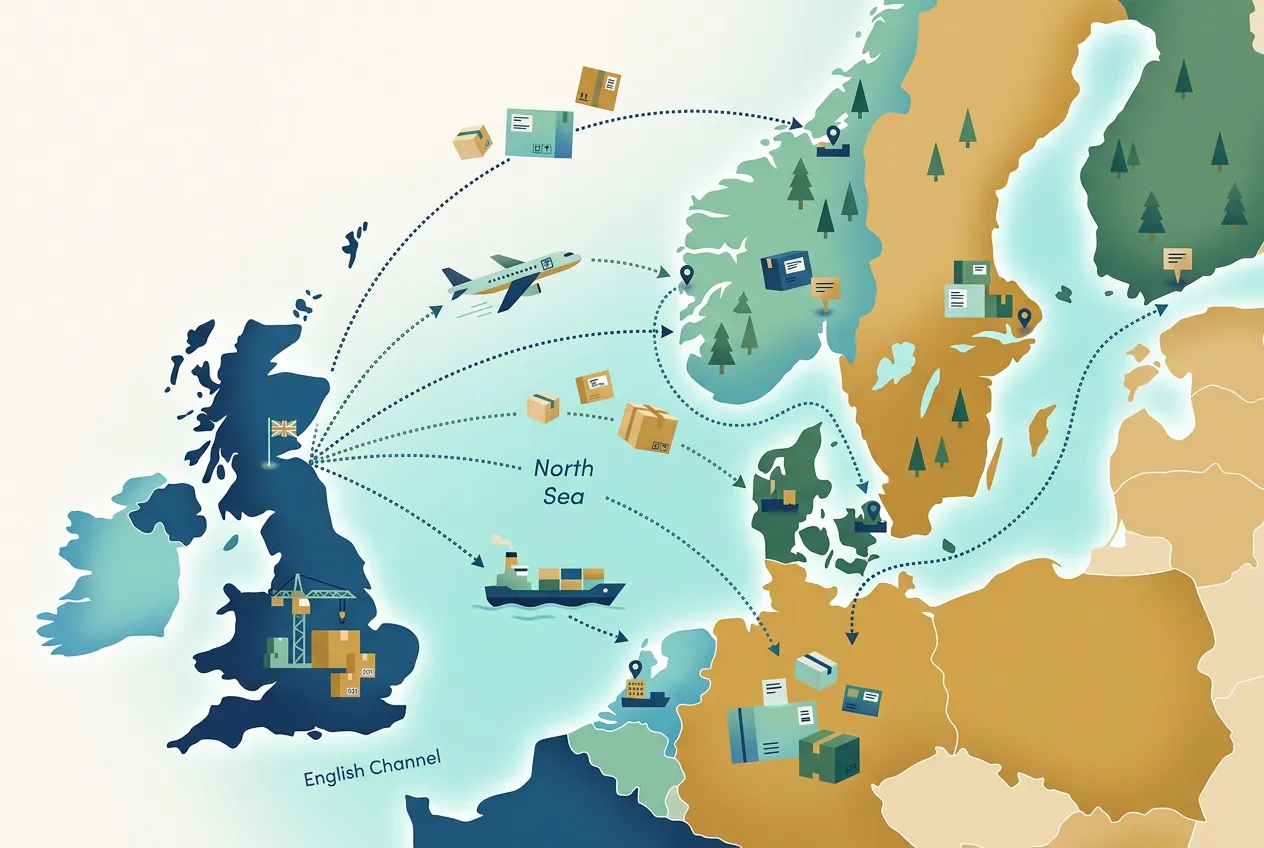
Every UK parcel heading to the EU or Norway raises the same questions: who pays the duty, what does delivery cost, and what happens when it comes back? Fall ’26 gives UK brands two better ways to answer them inside Shopify, plus a newer EU consumer rule to configure for. Here’s how to choose.
This post is part of our Shopify Editions Fall ’26 series. For the full picture, start with Shopify Editions Fall ’26: what UK brands should act on.
Managed Markets is open to UK-based businesses, as well as US and Canadian ones, that use Shopify Payments, sell in pounds, fulfil from the UK and have store content in English. UK stores also sign a self-billing agreement for tax purposes. Global-e acts as merchant of record on international orders, handling duties, taxes and compliance.
Fall ’26 adds all-in pricing with guaranteed duties and taxes plus flat-rate shipping. Shopify reports 50% higher international conversion for brands using it. Here’s how the flat rates work:
The trade-offs are real. You can’t edit Managed Markets’ flat rates. Buying a different label voids the guarantee. Flat rates aren’t available if your store has moved to shipping options by market. Shopify Protect’s chargeback cover on Managed Markets international orders applies to US stores only. Subscriptions, B2B orders and multi-entity stores aren’t supported on international orders. And Norwegian, Swedish or Danish businesses can’t use Managed Markets at all.
If you’d rather keep control of carriers and rates, Fall ’26 improves the do-it-yourself set-up:
Shopify’s help centre flags EU Directive 2023/2673, in force since 19 June 2026, which requires an electronic way for EU consumers to exercise their 14-day right of withdrawal. Shopify’s recommended set-up:
On Managed Markets, compliant EU policies are applied to those orders automatically, though handling requests and buying return labels stays with you. Either way, Shopify is clear that the tools alone don’t make you compliant, so have your set-up checked by a legal adviser.
| If you… | Start with |
|---|---|
| Are UK-based and want one all-in price with no duty paperwork | Managed Markets with flat rates |
| Want control over carriers and rates, or already use shipping options by market | Your own markets set-up |
| Are based in Norway, Sweden or Denmark | Your own markets set-up (Managed Markets isn’t available) |
Book an international set-up review: we build and run Shopify stores across the UK and the Nordics. We’ll compare Managed Markets with your current set-up and configure your EU returns.
Shopify Editions
5 min read
Shopify Protect is live, Rollouts can run your Black Friday sale, and checkout custom fields arrive after Cyber Monday. What to switch on, and in what order.

Shopify Editions
6 min read
Shopify's Fall '26 Edition, Exponential, for UK and Nordic brands: the updates worth acting on, the US-only features you can skip and where to start.

Shopify Editions
8 min read
Shopify's Spring 2026 Editions, feature by feature: agentic commerce, Campaign Autopilot, POS V11, Markets and discounts, and the five things to act on first.