1. AI chats are becoming a sales channel
Shopify says more than 1 billion products in its catalogue can now be discovered across AI channels, and more than 400 million shoppers hold Shop Pay accounts (as of 30 September 2026, according to Shopify’s Fall ’26 Edition page). Fall ’26 pushes checkout into more of those chats: Google AI Mode and Gemini, plus Shop Pay inside third-party AI agents.
There’s a catch for UK brands. Google’s direct checkout currently requires you to sell to customers in the US, Canada or Australia. Your store can be based anywhere, but UK shoppers aren’t covered yet.
The groundwork applies to everyone, though. A new admin page shows whether your store qualifies for Shopify Catalog, and a knowledge base lets you approve the facts agents repeat about your policies and FAQs. Our guide to agentic commerce on Shopify explains how to get your products sold inside AI chats.
2. Fraud protection that mostly switches itself on
Shopify Protect brings Shopify’s fraud and dispute tools together. It declines near-certain fraud before payment is authorised, explains the risk on every order, drafts chargeback responses with AI and attaches carrier proof of delivery automatically. Shopify says it is live for every business on Shopify Payments, largely at no extra cost. We cover what to switch on, and when, in checkout, payments and fraud in Fall ’26.
3. Checkout gets tidier, but not before Black Friday
Built-in custom fields for delivery instructions and gift messages remove the need for an app. Plus stores also get text, date, choice-list and checkbox fields. Payment methods move to a tiled layout and the form tightens up.
Shopify’s help centre is explicit that custom fields won’t be released before or during Black Friday Cyber Monday (BFCM), so plan them for the new year.
4. Rollouts make launches safer and roll sales back on time
Rollouts bundle a theme change, a checkout configuration, catalogues and discounts into one scheduled launch, event or experiment. An event rolls back automatically when it ends, which suits a Black Friday sale that must disappear on time. A/B experiments need the Grow plan or higher.
Our checkout post includes a step-by-step plan for running your Black Friday sale as a rollout. For experiments, read our guide to A/B testing with Shopify Rollouts.
5. Sidekick moves from chatbot to assistant
Sidekick can now plan several changes and apply them after one approval, write code, research the web, and test its own suggestions against simulated shoppers in SimGym. Shopify reports that daily Sidekick sessions have grown 4.2x year on year. Canvas, the new whole-store editor, is built around it, and Shopify says it takes a store from no theme to launch 20% faster. Read how to put Sidekick and Canvas to work without losing control.
6. Selling from the UK into the EU and Nordics
Managed Markets adds all-in prices with guaranteed duties and taxes, plus flat-rate shipping. Shopify reports 50% higher international conversion for brands using it, on Shopify’s Fall ’26 Edition page.
Shipping profiles, return windows and cancellation rules can now be set per market. UK businesses can also buy DHL Express labels in the admin and ship to Royal Mail pickup locations.
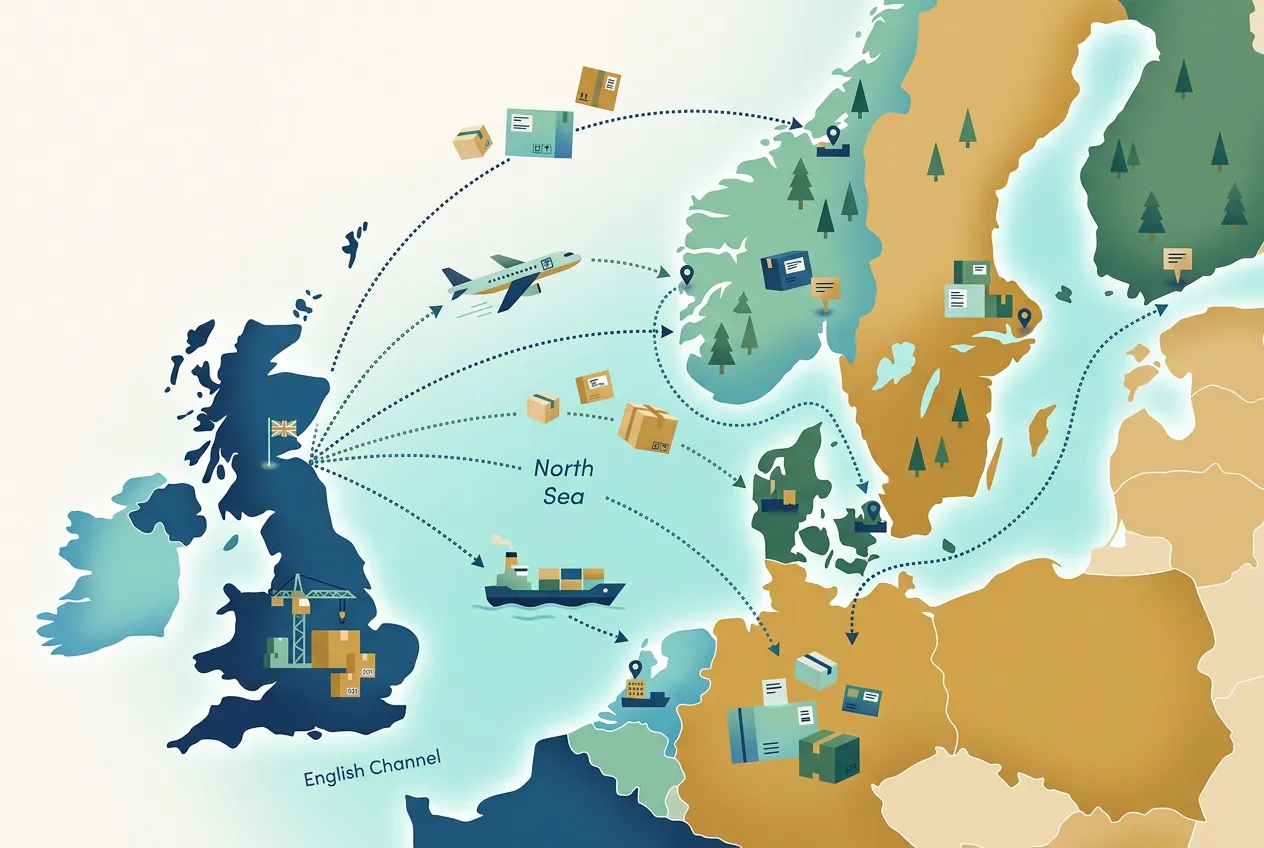
If you’re opening a market in Norway, Sweden or Denmark, we run that as a fixed-price Nordic market launch.
7. Developer deadlines worth diarising
Apps can no longer create or update script tags, and Shopify stops loading existing ones on 1 March 2027. App Store apps must switch to expiring access tokens before January 2027 to stay listed.
If your store relies on older apps, or on a custom app built a few years ago, audit it now.